
STEP UP HOUSING
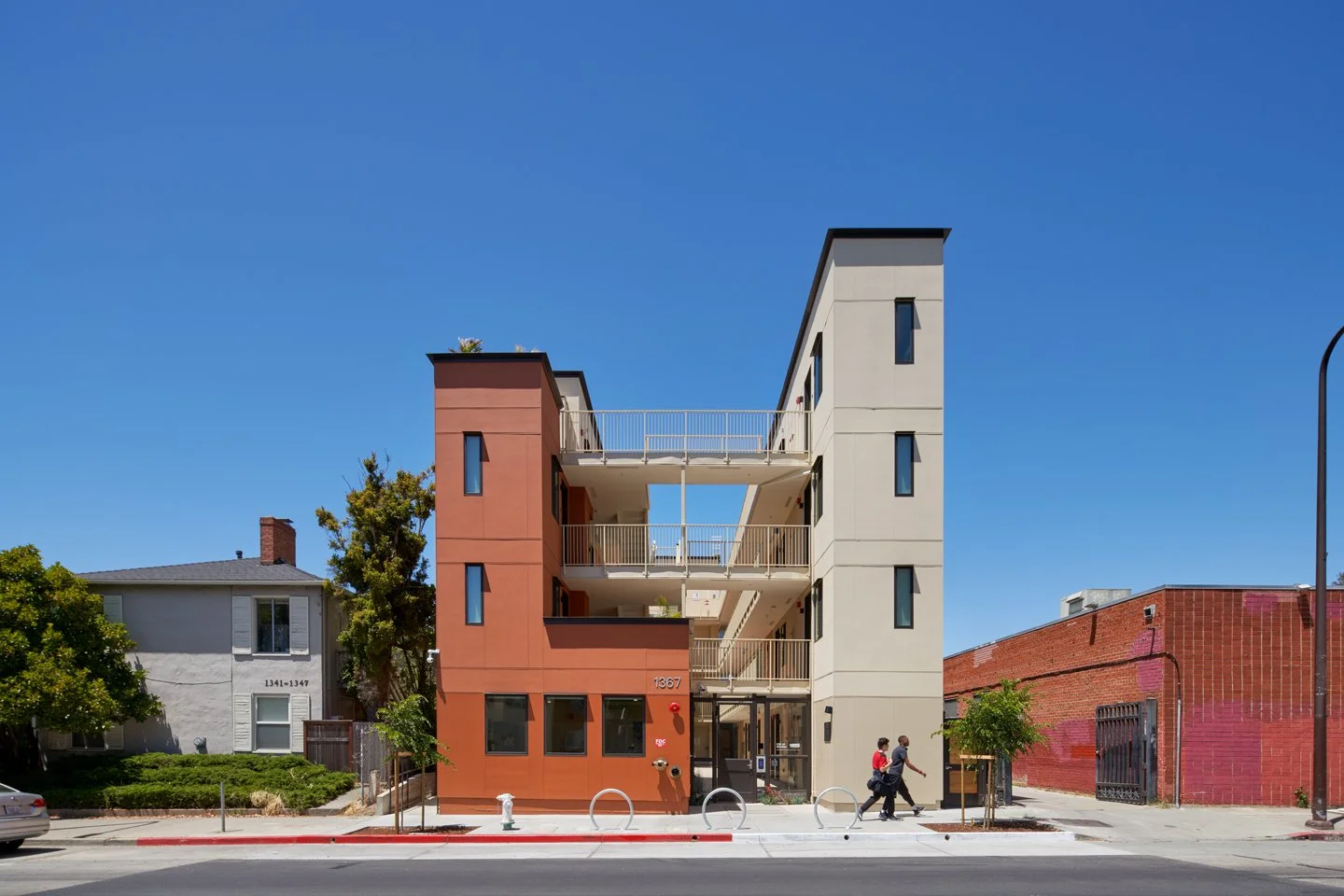
Designed for nonprofit Building Opportunities for Self Sufficiency (BOSS), Step Up Housing provides 39 units of supportive housing for people experiencing homelessness along a sunny and centrally-located stretch of downtown Berkeley. Step-Up Housing redefines the classic SRO by creating a model for the 50x100 Californian lot in downtown Berkeley. The building is small enough to bypass significant red tape and codes associated with group housing projects while efficiently providing much needed density to the San Francisco Bay Area.
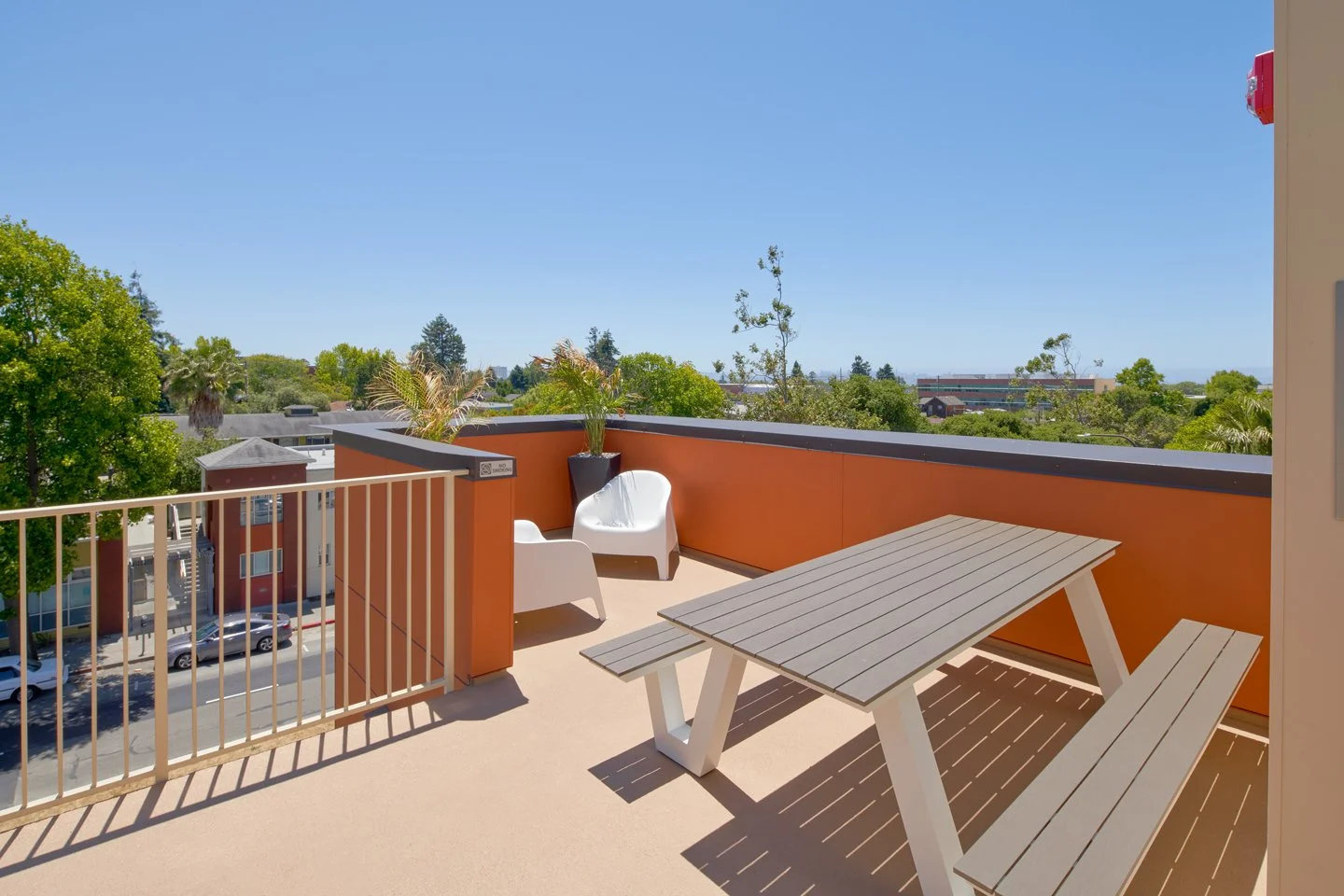
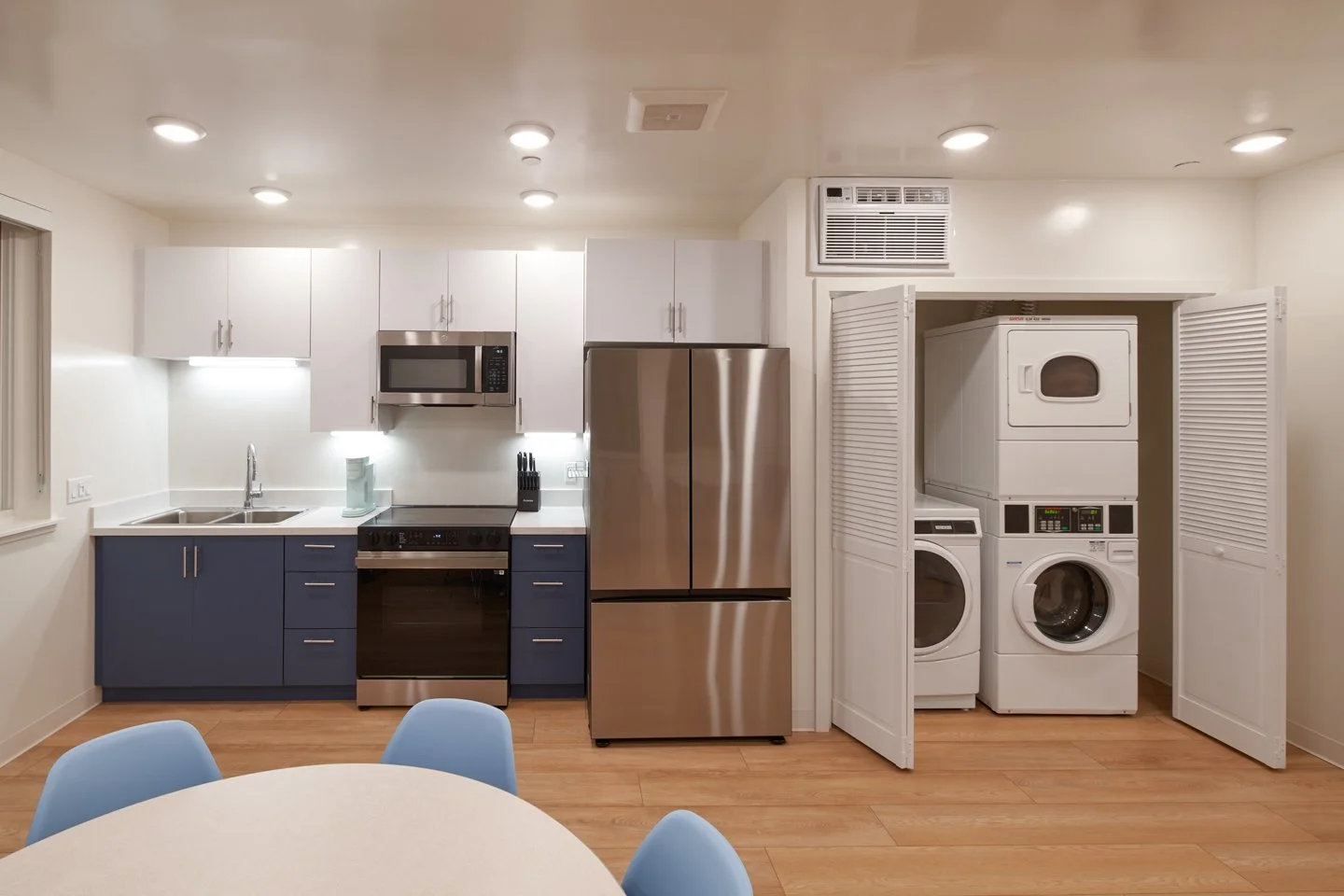
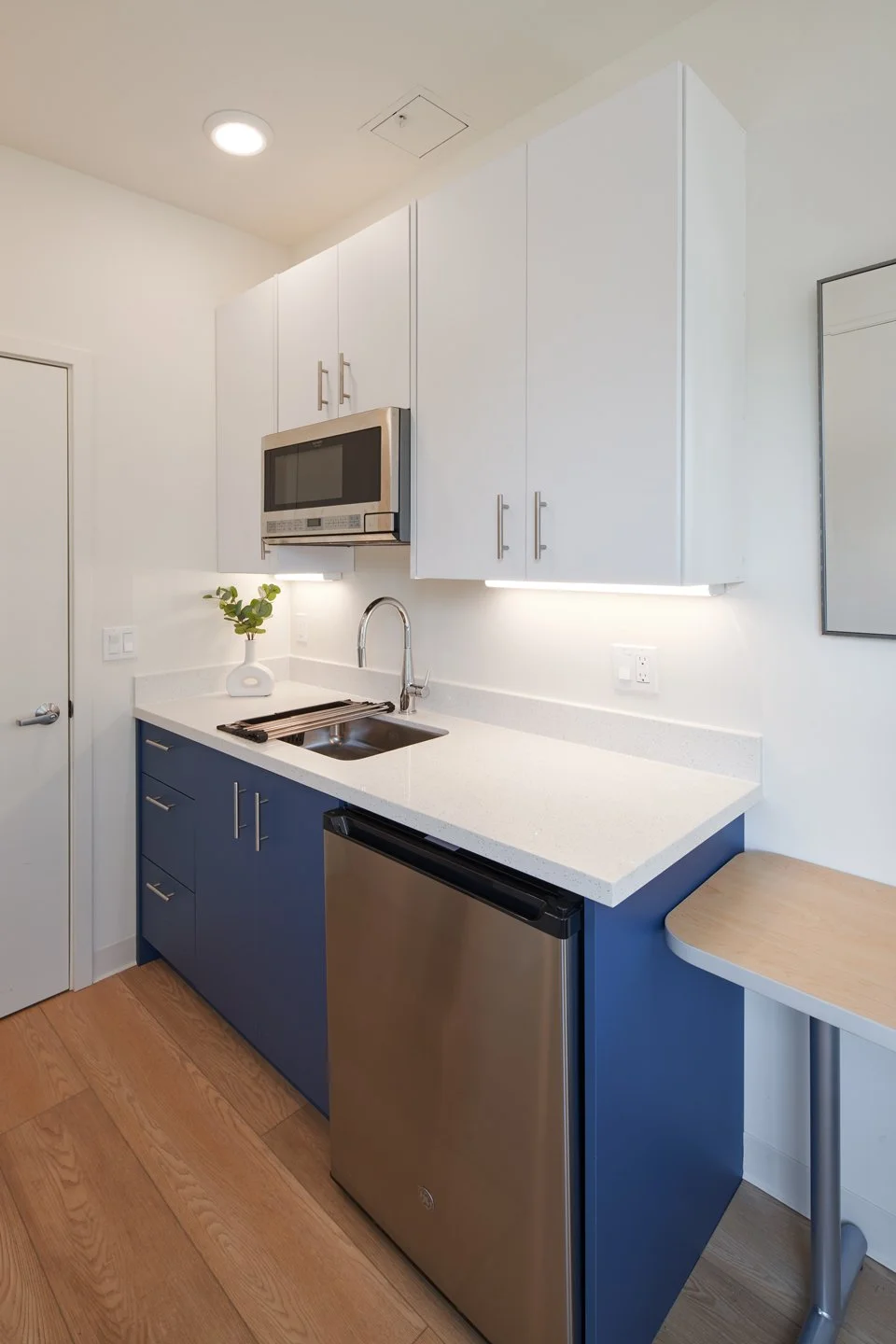
The micro-units provide a comfortable alternative to emergency housing. Each unit offers residents a sense of well-being and dignity, featuring their own private bathroom, kitchenette with a mini fridge and a desk; providing comfort and a greater quality of living than the typical SRO, while remaining affordable. Located along bustling University Avenue, residents have easy access to public transit, parks and all that downtown Berkeley has to offer. The U-shaped design centers an open courtyard with outdoor seating and native planting, providing a peaceful space. Residents can also gather on sunny patios on the 2nd and 4th floors, enjoying panoramic views of the Bay.


The common spaces will host supportive services, meals, healthcare and residential amenities with staff on-site at all times who can help with case management, job navigation, mental health and addiction recovery, and applying for medical care benefits. Made possible by Berkeley residents who passed measures O and P to support affordable housing and services for the unhoused, the four-story structure is a permanent building for transitional housing. A building mindfully built with resilience for its formerly unhoused residents and the community of Berkeley. Community gardens, roof decks, and kitchen in the central courtyard provide public gathering spaces for communal support and gatherings. Each unit comes with two windows creating passive ventilation. All units are planned to be flooded with natural light and have access to a porch with visibility to encourage a sense of “eyes on the street” security and community engagement amongst the residents.
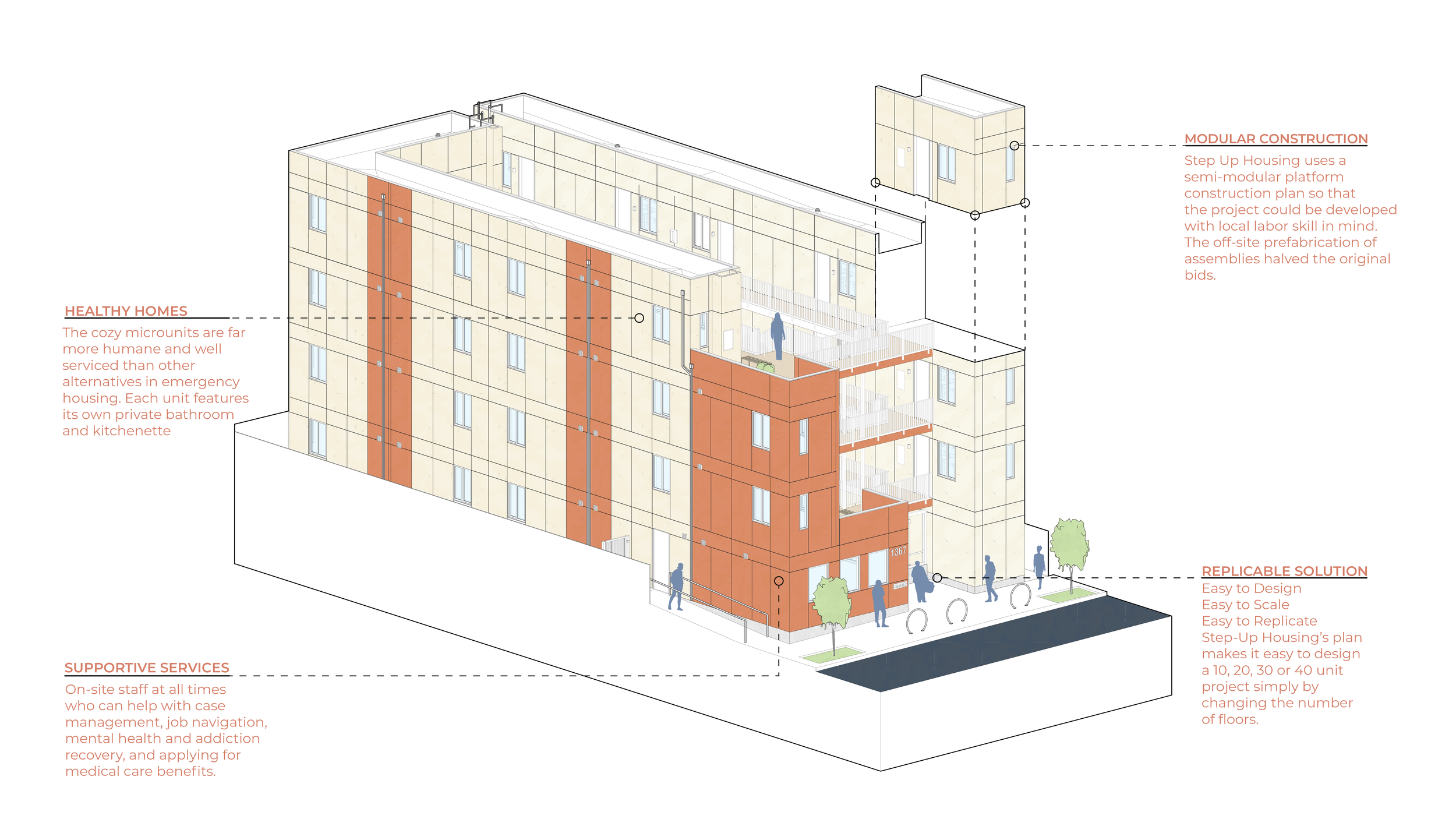
By blending new technology with traditional methods, Step-Up Housing’s design and construction management teams were able to significantly reduce both construction costs and timelines. Instead of just focusing on material costs, which is common in conventional value engineering, they reoriented their approach to prioritize reducing labor costs, which often makes up more than two-thirds of a construction budget. They used multi-purpose materials to reduce the number of different skilled trades and labor hours needed, effectively halving installation time on each side of the building while meeting all fire-resistance and acoustic insulation requirements. The project team also reduced the building’s power consumption by over 400% by minimizing per-unit power needs, which they accomplished by combining architectural design thinking with utility and construction expertise. For instance, the team identified and were able to reduce three electric vaults to one, cutting many associated power costs with a 1200 amp 3 phase power.
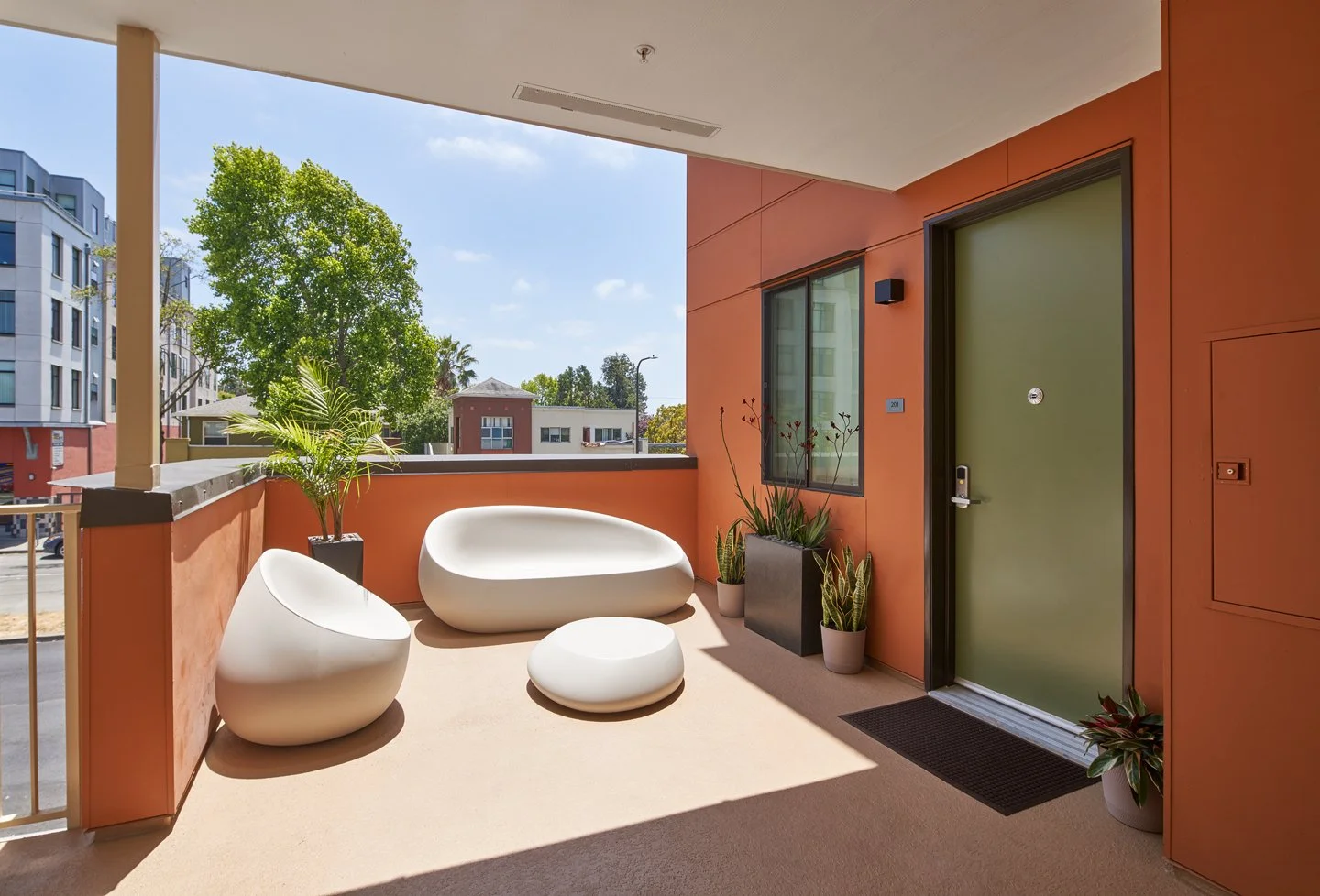
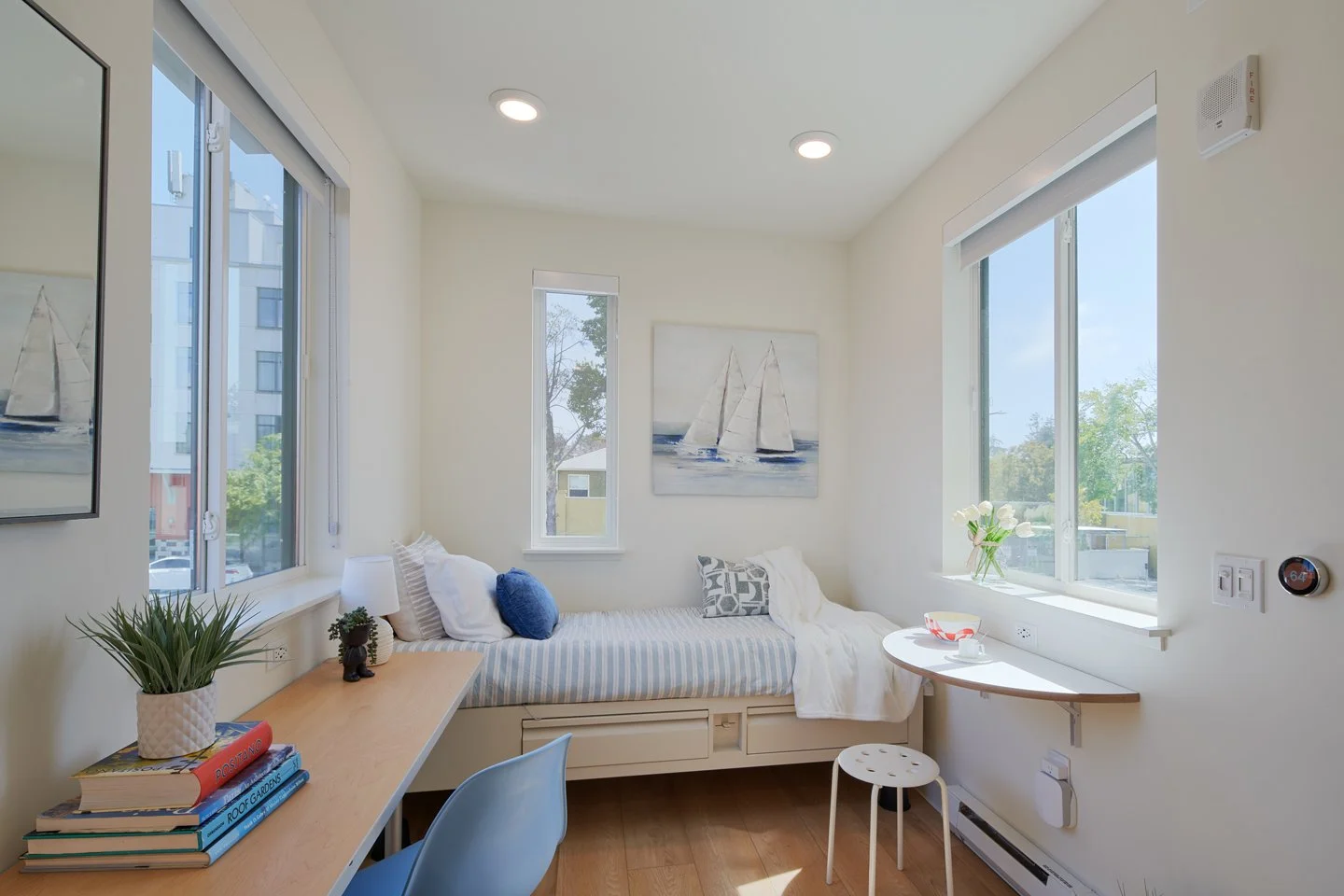
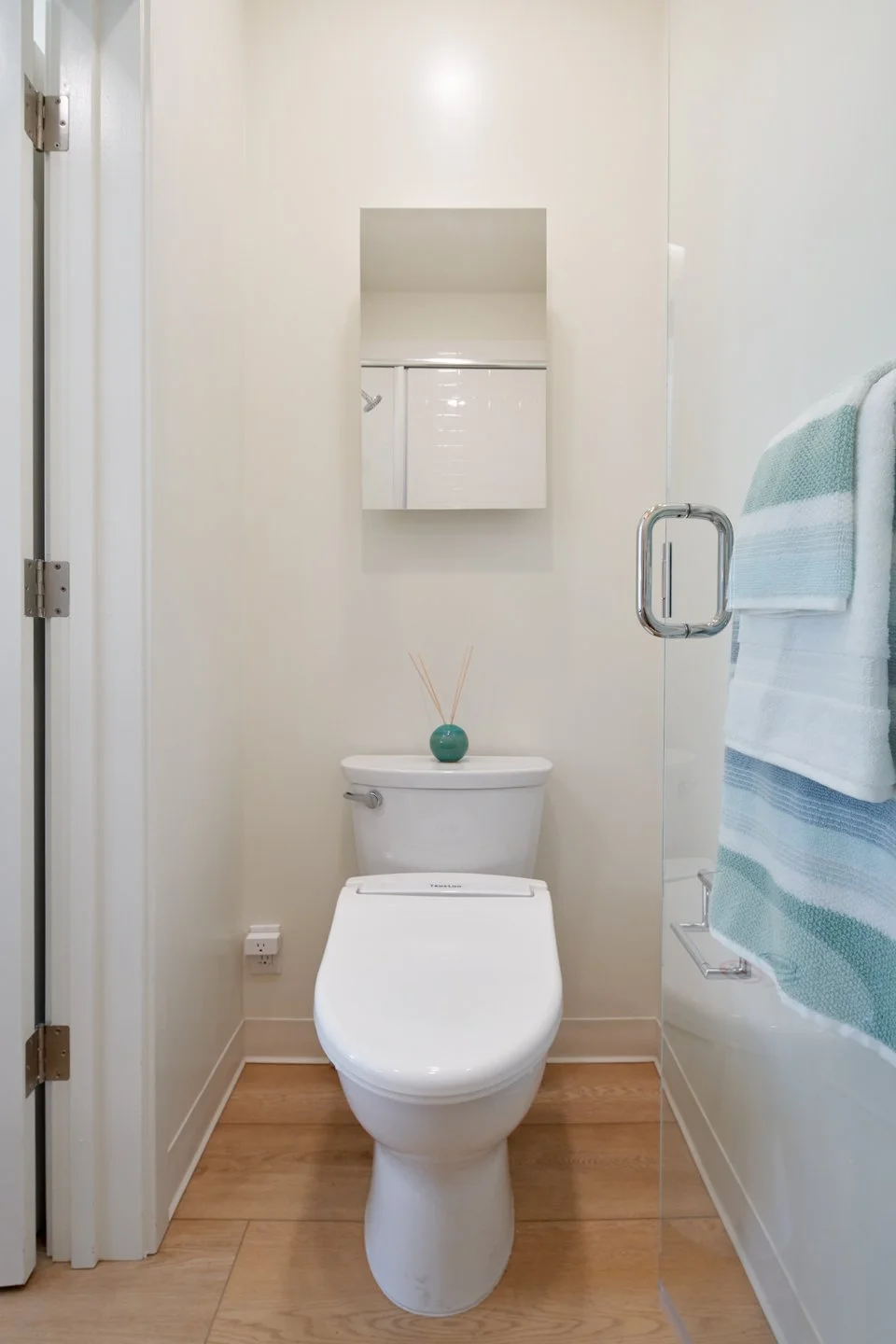
The design for Step-Up Housing redefines the single-room occupancy (SRO) unit, striking a balance between the compactness of traditional SROs and the comfort of affordable studio apartments. Each micro-unit maximizes its small footprint with carefully integrated amenities: a foldable side table that tucks away to open circulation to the bed, a dedicated desk that supports residents’ professional growth, and a kitchenette efficiently fitted into a corner. A private, fully outfitted bathroom with a shower restores a sense of dignity often missing from SRO housing, where shared facilities are common.

Architect of Record
Design Draw Build
Design Architect
Trachtenberg Architects
General Contractor
Hawk Development
Structural Engineer
Dolmen Consulting Engineers
Client
Panoramic Interests
Civil Engineer
Kister Savio & Rei Land Surveying and Civil Engineering
MEP
IMEG